
Henry’s Update: His Blood Values Are Improving, but the Fight Against Babesia Continues
Since our last post about Henry, a lot has happened.
At that point, Henry had just been diagnosed with severe anemia, liver stress and a confirmed Babesia gibsoni infection. His hematocrit was critically low at only 6.6%, his red blood cell count was far below normal, and the vets warned us that he could collapse at any time.
Over the past few days, the main goal has been to stabilize him first. Henry has been receiving supportive treatment for his anemia and liver while staying under close veterinary supervision.
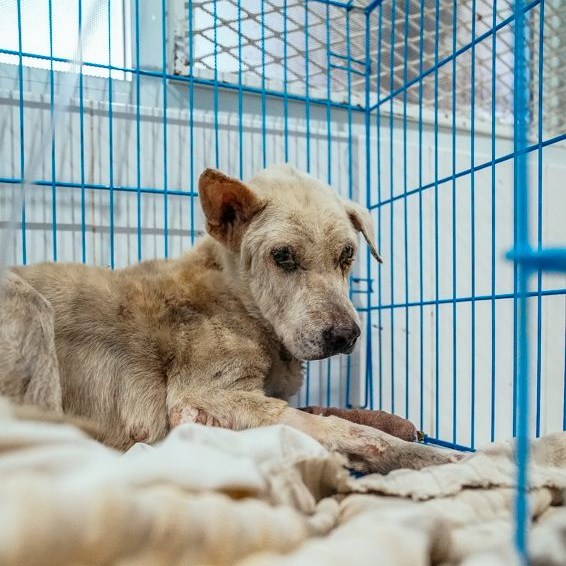
Today, his blood was tested again.
The new results finally give us a clearer picture of how his body is responding. There are some important improvements, which is encouraging, but Henry is still seriously ill and several values need to be watched closely.
His anemia is improving
The biggest change can be seen in Henry’s red blood cell values.
| Blood value | Previous result | Today | What it means |
|---|---|---|---|
| RBC | 1.01 | 1.94 | His red blood cell count has increased significantly, although it is still far below normal. |
| HCT | 6.6% | 12.21% | His hematocrit has almost doubled, but he is still severely anemic. |
| HGB | 3.2 g/dL | 3.7 g/dL | Hemoglobin has improved slightly, but remains extremely low. |
| Platelets | 127 | 75 | His platelet count has dropped further and remains a concern. |
The hematocrit is one of the most important values here. It shows what percentage of the blood is made up of red blood cells, which are responsible for transporting oxygen through the body.
Henry started at just 6.6%.
Today, he is at 12.21%.
That is a clear improvement and shows that his body is producing more red blood cells than before. The treatment supporting his blood production appears to be helping.
At the same time, 12.21% is still very low, so Henry is not anywhere near recovered yet. His anemia is still severe and he needs continued monitoring.
His platelet count has also fallen from 127 to 75. Platelets are important for normal blood clotting, and low platelet levels are commonly seen in dogs suffering from babesiosis.
So while one part of his bloodwork is moving in the right direction, the infection is clearly still affecting him.
His liver values are also showing some improvement
Henry’s first blood test showed significant liver stress, especially through his elevated ALT and bilirubin levels.
Today’s results look somewhat better.
| Blood chemistry | Previous result | Today | Development |
|---|---|---|---|
| Albumin | 1.7 g/dL | 1.8 g/dL | Slightly improved, still low |
| ALT | 396 U/L | 190 U/L | Significantly improved |
| ALP | 156 U/L | 164 U/L | Slightly increased |
| Bilirubin | 1.5 mg/dL | 1.4 mg/dL | Slightly improved |
| Total Protein | 10.3 g/dL | 9.9 g/dL | Slightly lower, still elevated |
| Globulin | 8.6 g/dL | 8.1 g/dL | Slightly lower, still elevated |
The most encouraging change is his ALT.
ALT is an enzyme found mainly in liver cells. When those cells are damaged or under significant stress, ALT can rise in the blood.
Henry’s ALT has dropped from 396 to 190 U/L, which is a significant improvement and suggests that the stress on his liver may be decreasing.
His bilirubin is also slightly lower, and his albumin has increased a little. His liver values are still not normal, but overall there are signs that his liver is coping better than it was a few days ago.
One new concern: his urea has increased
Not every result improved.
Henry’s BUN, or blood urea nitrogen, has increased significantly.
| Kidney related value | Previous result | Today |
|---|---|---|
| BUN | 17 mg/dL | 52 mg/dL |
| Creatinine | 0.8 mg/dL | 0.8 mg/dL |
An elevated BUN can have several possible causes. It can be associated with kidney problems, but it can also increase because of dehydration, illness, protein breakdown or other changes in the body.
Importantly, Henry’s creatinine is still normal and unchanged at 0.8 mg/dL.
So at this stage, the high BUN does not automatically mean that Henry has a kidney problem, but it is definitely something that needs to be monitored closely during the next round of blood tests.
The next challenge: treating the Babesia
Now that Henry’s red blood cell values have improved somewhat, the next major question is how to treat the Babesia gibsoni infection itself.
The original plan was to use imidocarb injections.
However, Henry is still severely anemic and physically fragile. The vets explained that imidocarb can be a very hard treatment on the body and that, in Henry’s current condition, there would be a real risk of him deteriorating or even collapsing after the injection.
Because his PCR confirmed Babesia gibsoni, we asked the clinic whether an oral treatment using atovaquone together with azithromycin would be possible.
The vets agreed that this would be an option.
The problem is that atovaquone is currently not available.
We contacted several other clinics today to ask whether anyone had it in stock, but so far none of them do. We are still checking, but waiting too long is also not an option.
The infection is still active, and as long as it remains untreated, it can continue affecting Henry’s red blood cells and platelets.
Henry is starting a 10 day oral treatment
After discussing the alternatives with the veterinary team, we agreed to start another oral treatment protocol for Babesia gibsoni.
For the next ten days, Henry will receive:
- Clindamycin
- Doxycycline
- Metronidazole
The clinic also shared medical literature with us describing this combination as an alternative treatment option for Babesia gibsoni.
It is not the preferred first option when atovaquone is available, but in Henry’s current situation it gives us a way to begin treating the infection now without immediately exposing him to the more aggressive imidocarb injection.
The first doses start today.
His supportive treatment continues
The Babesia treatment does not replace the supportive care Henry has already been receiving.
His treatment for the anemia continues, including erythropoietin, which is being used to stimulate the production of red blood cells.
His liver support also continues, and the clinic has now added an oral liver supplement that he will receive every day.
So right now, Henry’s treatment has several goals at the same time: helping his body continue rebuilding red blood cells, supporting his liver, monitoring the changes in his kidney related values and finally starting to directly treat the Babesia infection.
He remains in the clinic while all of this is ongoing.
What happens next
The oral Babesia treatment will continue for 10 days.
The final dose is planned for the morning of October 15.
On October 16, Henry will have another full round of testing.
The vets plan to repeat:
| Test | Why it matters |
|---|---|
| Hematology / CBC | To check whether his RBC, hematocrit, hemoglobin and platelets continue to improve |
| Biochemistry | To reassess his liver, kidney related values and general organ function |
| Babesia PCR | To see whether Babesia gibsoni is still detectable after treatment |
These results will determine what happens next.
If Henry continues to improve and the Babesia responds to the oral treatment, we can continue from there.
If the infection is still present or his condition worsens, we will have to reconsider other treatment options, including imidocarb.
And if atovaquone becomes available in the meantime, we will discuss that again with the veterinary team as well.
Better, but still far from recovered
Seeing Henry’s hematocrit rise from 6.6% to 12.21% is genuinely encouraging.
After seeing how low his values were when he arrived at the clinic, any real improvement matters.
But this is not a recovery update yet.
Henry is still severely anemic. His platelet count has dropped further. His Babesia infection still needs to be brought under control. His liver is improving, but not normal, and the rise in BUN is another value that now needs to be followed closely.
What today’s results do show is that his body is responding.
That gives us something to work with.
Now we need to see whether the next ten days of treatment can bring the Babesia under control and allow his blood values to continue moving in the right direction.
Henry still needs your help
Henry has now spent several days in the clinic and has already undergone repeated blood tests, PCR testing, injections, medication and continuous veterinary care.
His vet bill has already reached several hundred euros, and his treatment is far from finished.
He still needs continued hospitalization, daily medication and another complete round of testing after the ten day Babesia treatment.
If you would like to support Henry, every donation helps us continue his treatment.
Thank you to everyone who has already donated, shared his story or followed his progress.
We will keep you updated as Henry continues his treatment.
Help dogs like this one
Every case on this blog was paid for by people reading it.